If you’ve ever grown your own herbs, you know what I mean when I say that it’s hard not to get a little obsessive over your herb garden! When I have fresh herbs growing, I’m always looking for new ways to include them in my cooking, adding a lot of fresh flavor for a small amount of work. Herbs are so easy to grow anywhere, whether you have a large garden or just a windowsill, so herbs are one of those things that just about anyone can grow and enjoy in their kitchen.
There are some reasons you’d want to dry your herbs though, and that’s where spice blends come in! Drying and blending my own seasonings has become one of my favorite low-effort, high-reward garden projects. There’s something so satisfying about mixing up a jar of something you’d normally grab off a grocery shelf and knowing exactly what’s in it!
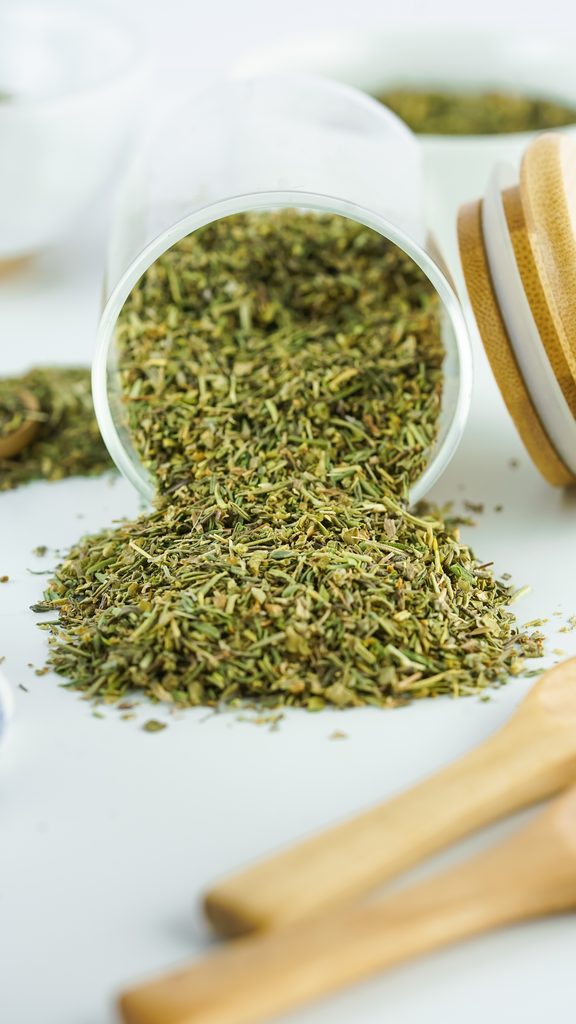
This one is one of my favorite herb blends to make- between my garden beds and pots on my patio, I’ve got more thyme, rosemary, and oregano than one household probably needs, so I always have what I need on hand. Herbes de Provence was one of the first blends I tackled, and it’s stayed in regular rotation ever since- it’s ridiculously easy, endlessly useful, and honestly a little fun to customize once you get the hang of it!
If you’ve never made your own Herbes de Provence, this is a great place to start. It’s a classic French herb blend built on a handful of pantry staples- thyme, savory, marjoram, rosemary, and oregano- that comes together in about two minutes with no cooking, no special equipment, and no hard-to-find ingredients.
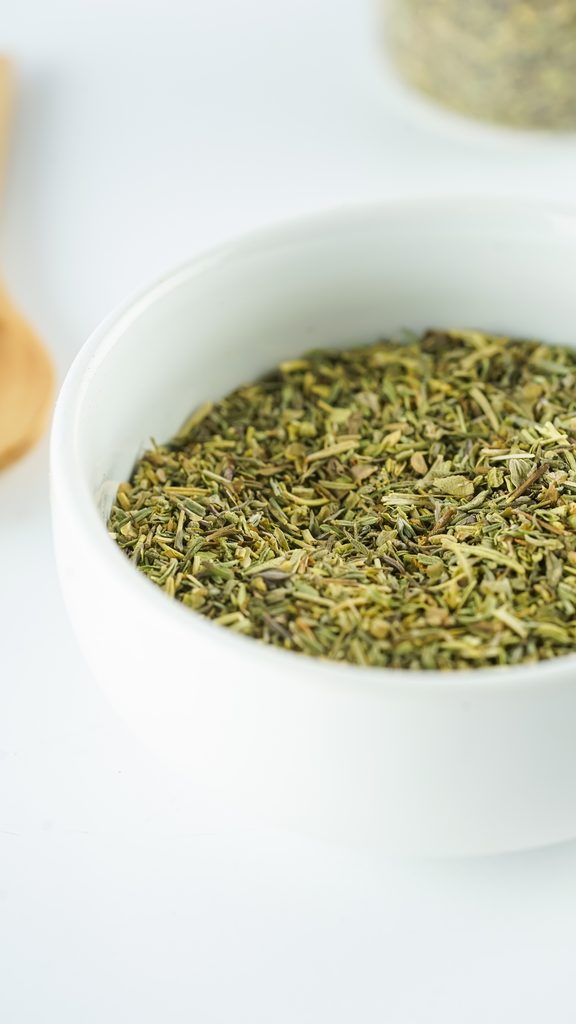
This seasoning makes everything better: roasted vegetables, grilled chicken, soups, marinades, even a simple olive oil dip for bread. And because the “real” version has never had one fixed recipe, you can make it entirely your own!
Frequently Asked Questions About Herbes de Provence
What is Herbes de Provence made of? At its core, Herbes de Provence is a mix of dried thyme, savory, marjoram, rosemary, and oregano- that’s the base most versions build from. But the blend has never had one “official” formula- it’s a regional seasoning from the Provence area of Southern France, and historically almost every household had its own take, adding or swapping herbs depending on what they had on hand and what they were cooking.
Is Herbes de Provence supposed to have lavender in it? Not originally. Traditional French versions never included it. Lavender started showing up in the blend in the 1970s, largely thanks to commercial spice companies marketing it to American tourists as a nod to Provence’s famous lavender fields- it’s more of a branding addition than a traditional one. It’s become a signature {but optional} ingredient in a lot of the Herbes de Provence you’ll find today, though, so if you like a slightly floral, aromatic note, a small amount goes a long way. {This is one reason I love making my own- I prefer NOT including lavender and most store shelves include it!}
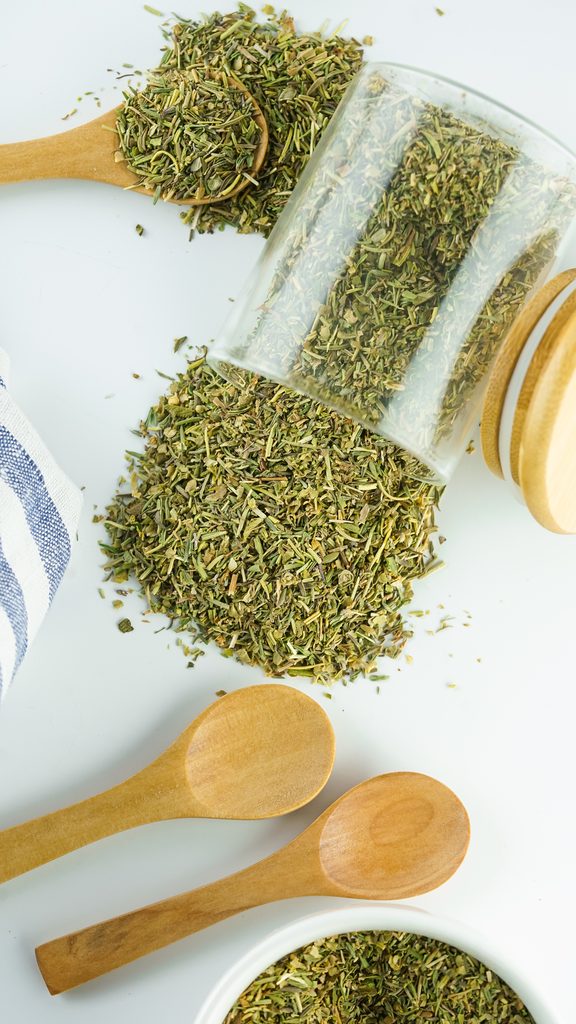
Can I customize my own Herbes de Provence blend? Absolutely- and I highly encourage it! Beyond the five base herbs, other traditional versions have included dill, tarragon, parsley, sage, fennel, basil, chervil, mint, and anise seed, depending on the household and the dish. You don’t need all of them {or any of them} to get an authentic-tasting blend. Think of the base as your foundation and the extras as ways to nudge the flavor toward what you’re cooking.
How do I substitute Herbes de Provence for store-bought in a recipe? Easy- use it as a straight 1:1 swap. Wherever a recipe calls for store-bought Herbes de Provence, use the same amount of your homemade version.
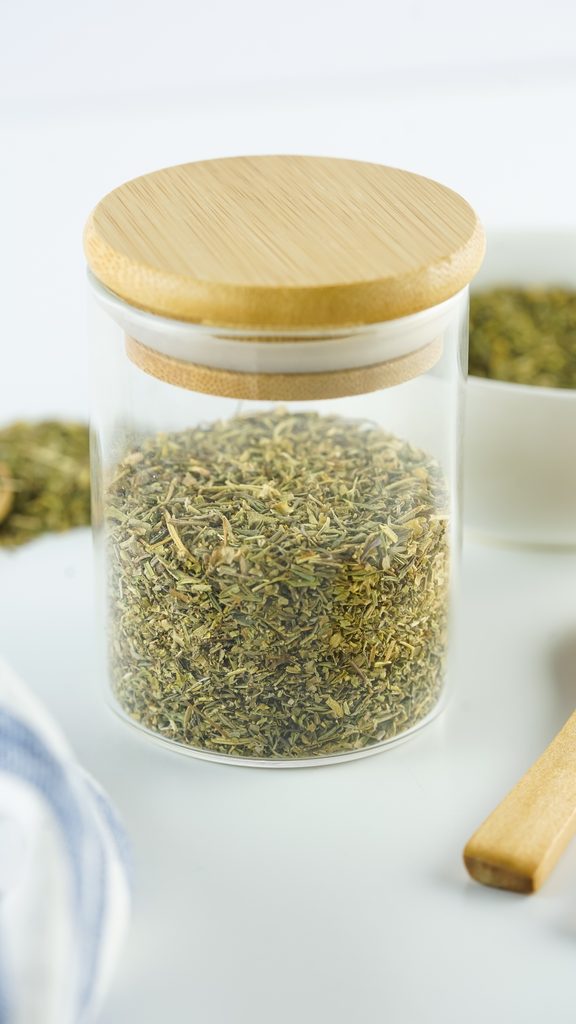
How long does homemade Herbes de Provence last, and how should I store it? Stored properly, it’ll keep for up to 6 months. Keep it in an airtight container or jar, and avoid humid storage spots- moisture is the enemy here. It’ll cause the herbs to clump and shortens how long the blend stays potent. Because the denser, heavier herbs in the mix tend to settle and separate over time, give the jar a shake before each use to redistribute everything evenly!
Does the quality of herbs matter for a blend like this? More than you’d expect. Since this recipe is just herbs- no oils, no fillers, nothing to mask lower-quality ingredients- the flavor of what you put in is exactly the flavor you get out. Using good, fresh dried herbs {especially herbs you’ve dried yourself, if possible!} makes a noticeably better final blend than reaching for the cheapest option on the shelf.
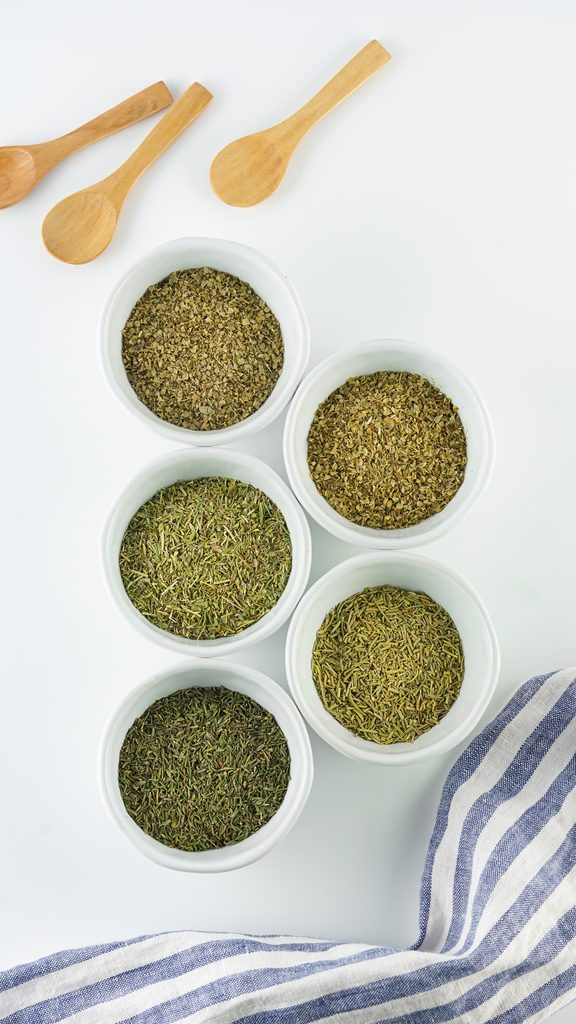
Homemade Herbes de Provence
Prep Time: 2 minutes Yields: 10 tablespoons
Ingredients
Base Blend:
- 3 tablespoons dried thyme
- 2 tablespoons dried summer savory
- 2 tablespoons dried marjoram
- 2 tablespoons dried rosemary
- 1 tablespoon dried oregano
Optional Additions {pick and choose to make it your own — see notes below}
- 1 tablespoon dried dill
- ½ tablespoon dried lavender
- 1 tablespoon dried tarragon
- 1 tablespoon dried parsley
- 1 tablespoon dried sage
- 1 tablespoon dried fennel
- 1 tablespoon dried basil
- 1 tablespoon dried chervil
- 1 tablespoon dried mint
- 1 tablespoon anise seed
Directions
- Add the base herbs to a small bowl or dish, along with any optional herbs you’d like to include.
- Stir thoroughly until everything is evenly combined.
- Use immediately, or transfer to an airtight container or jar for storage.
Notes & Tips
Toast the herbs first for a flavor boost. A quick 30–60 seconds in a dry skillet over low heat {just until fragrant- don’t let them brown!} wakes up the essential oils in dried herbs and gives the finished blend a deeper, more aromatic flavor. Let them cool completely before mixing and storing.
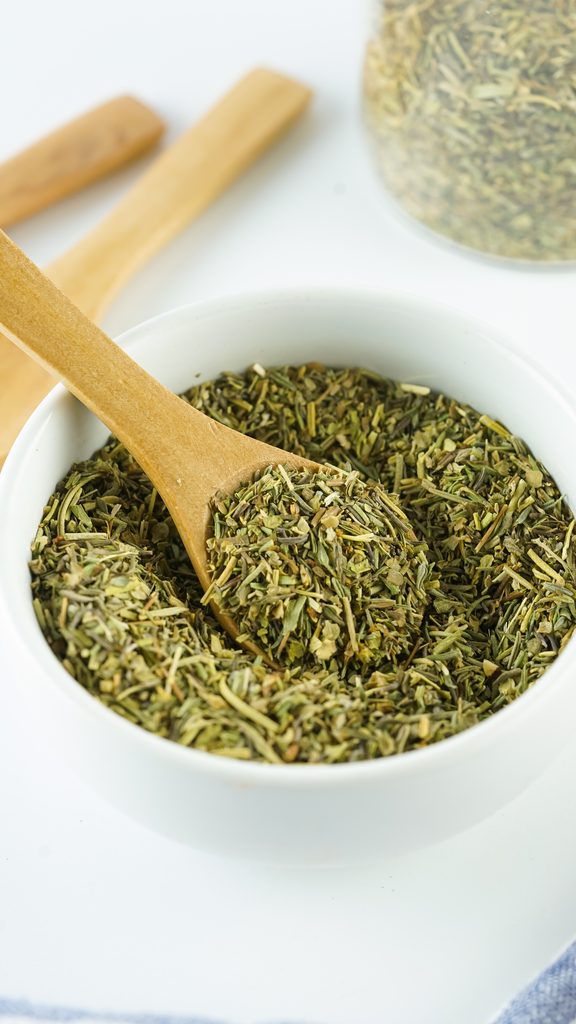
Grind it fine for marinades and dressings. Left whole, the blend is great for rubs and roasting. But if you’re stirring it into a vinaigrette, marinade, or softened butter, a quick pass through a spice grinder or a few turns with a mortar and pestle helps it distribute more evenly instead of clumping in one spot.
Try a small test batch first. If you’re not sure which optional herbs you’ll like, scale the whole recipe down to make just a tablespoon or two total {keeping the same ratios} before committing to a full 10-tablespoon batch. It’s an easy way to fine-tune your personal blend without wasting herbs.
A few favorite ways to use it:
- Rub it under the skin of a whole chicken {or over chicken thighs} before roasting
- Stir a spoonful into softened butter for an easy herb compound butter on steak, bread, or vegetables
- Whisk into olive oil and vinegar for a simple vinaigrette
- Toss with cubed potatoes or root vegetables before roasting
- Warm gently in olive oil with a little garlic for a quick bread-dipping oil

Leave a Reply